Millets Were Never the Problem.

Making Them Work Was.

MilHut exists to make millet foods work for real Indian kitchens — without compromising the grain, the ingredients, or the food itself.

A modern Indian kitchen showing a parent preparing soft rotis and fluffy idlis using MilHut millet mixes—illustrating convenience for busy families

Healthy eating shouldn’t be complicated.

Millets have always belonged in Indian kitchens.
The challenge is making them work in today’s kitchens — where food needs to be nutritious, convenient and dependable.

That’s the gap MilHut set out to solve.

Our mission is simple:

Help India eat healthier, without giving up taste, convenience, or comfort.

Explore our millet range →

Why We Chose Millets — And Why They Chose Us

We didn’t choose millets because they were trending.

Millets chose us — through real questions, everyday cooking challenges, and what we struggled with in our own kitchens.

When we explored millet foods for our families, we saw a clear gap: many products were difficult to cook, inconsistent in taste and texture, or made with ingredients we simply didn’t want in our homes.

And that’s when it became clear:

Millets weren’t the problem.
The way millet foods were being made was.

MilHut was born to change that — making millet foods genuinely functional, enjoyable, and relevant to modern Indian kitchens.

Millet palette showing ragi, jowar, bajra, foxtail, barnyard millet—clean-label single-millet grains used in MilHut products.

What We Discovered About Millets

Months of research, kitchen trials, product testing, and experimentation led us to one clear conclusion: millets are powerful — but they need to be understood.

From ragi (finger millet) and bajra (pearl millet) to foxtail millet, little millet and other traditional grains, each millet behaves differently. Creating good millet foods is not simply about replacing wheat or rice — it is about understanding the grain.

Assorted single-millet grains and stone-milled flours displayed in bowls — little millet, ragi, jowar, and foxtail millet.

1.Millets Stayed the Same.

Our Lifestyles Changed. 

Traditional millets have long been part of Indian food culture, but modern kitchens expect convenience, consistency, and speed. Unlike wheat and rice, different millets can behave very differently during cooking — making everyday millet foods harder than they need to be.

Traditional stone-milled processing of single-millet grains — slow, gentle grinding that preserves nutrients and natural behavior

2.Traditional Processing;

Had a Purpose.

Stone-milling, soaking, fermentation, and natural binding methods each played a role in creating reliable texture and flavour. When these steps are overlooked, millet foods can behave differently from batch to batch.

A shopper looking confused while comparing multiple grain jars labeled multigrain, protein blend, and gluten-free flour—illustrating how modern grain choices create overwhelm and uncertainty.

3. Millet Recipes Evolved;

Faster Than Understanding.

Modern millet recipes can make cooking look effortless. But hydration, soaking, fermentation, binding, and even grain variety can change the final result. Good millet food requires understanding how each grain naturally behaves.

These insights led us to one clear belief:
Millet foods should be designed around how modern India actually cooks and eats.

It Started With a Simple Question.

Why should eating better mean making everyday cooking harder?

When we began working with millets, we realised the challenge wasn’t their nutrition.
It was understanding how they behave.

Different grains. Different hydration. Different textures. Different results.

So instead of asking how to make millet behave like something else, we asked:

What if we understood the grain first?

Why MilHut Works — Our Approach to Better Millet Foods

Millets behave differently from every other grain.
We stopped forcing them to act like wheat — and instead built MilHut around how millets naturally behave.
That’s why our mixes are designed for soft, consistent, reliable results in real Indian kitchens.

Here’s how we do it:

Different Organic Millet whole grains arranged in the bowl

We Let the Grain Lead the Way

Instead of forcing shortcuts or trying to make millets behave like wheat, we build our recipes around how each grain naturally behaves — from water absorption and hydration to texture, heat, and cooking. The grain comes first. The recipe follows.

Different Organic Millet whole grains arranged in the bowl

We Let the Grain Lead the Way

Millets behave differently from wheat and rice. We understand each grain’s water absorption, heat response and texture to create millet foods that work naturally.
old modern transition

We Blend Traditional Wisdom With Modern Understanding

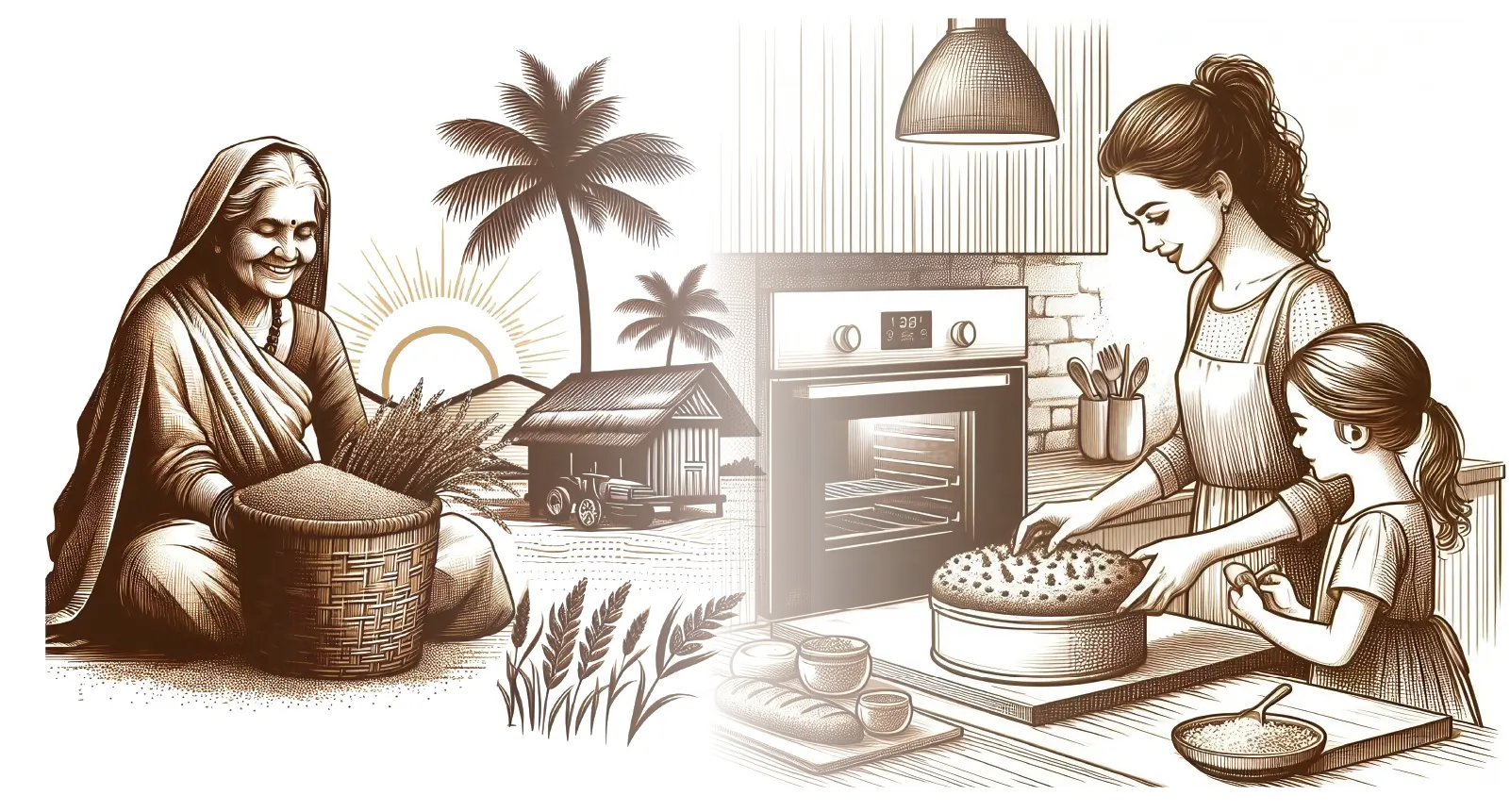
Traditional methods such as stone-milling, soaking, fermentation, and natural binding have shaped how grains have been used for generations. We combine that understanding with ingredient science, testing, and modern food development to create millet foods that are clean, practical, and reliable.

old modern transition

We Blend Traditional Wisdom With Modern Understanding

We combine traditional methods like stone-milling, fermentation and natural binding with ingredient science and testing — creating reliable, easy-to-use millet foods for today’s kitchens.
Collage showing the convenience of MilHut’s premixes: a person cooking millet dosas on a stovetop, fluffy millet idlis steaming in a traditional idli stand, and a rich ragi chocolate cake topped with chips in a container

We Design for Imperfect, Everyday Kitchens

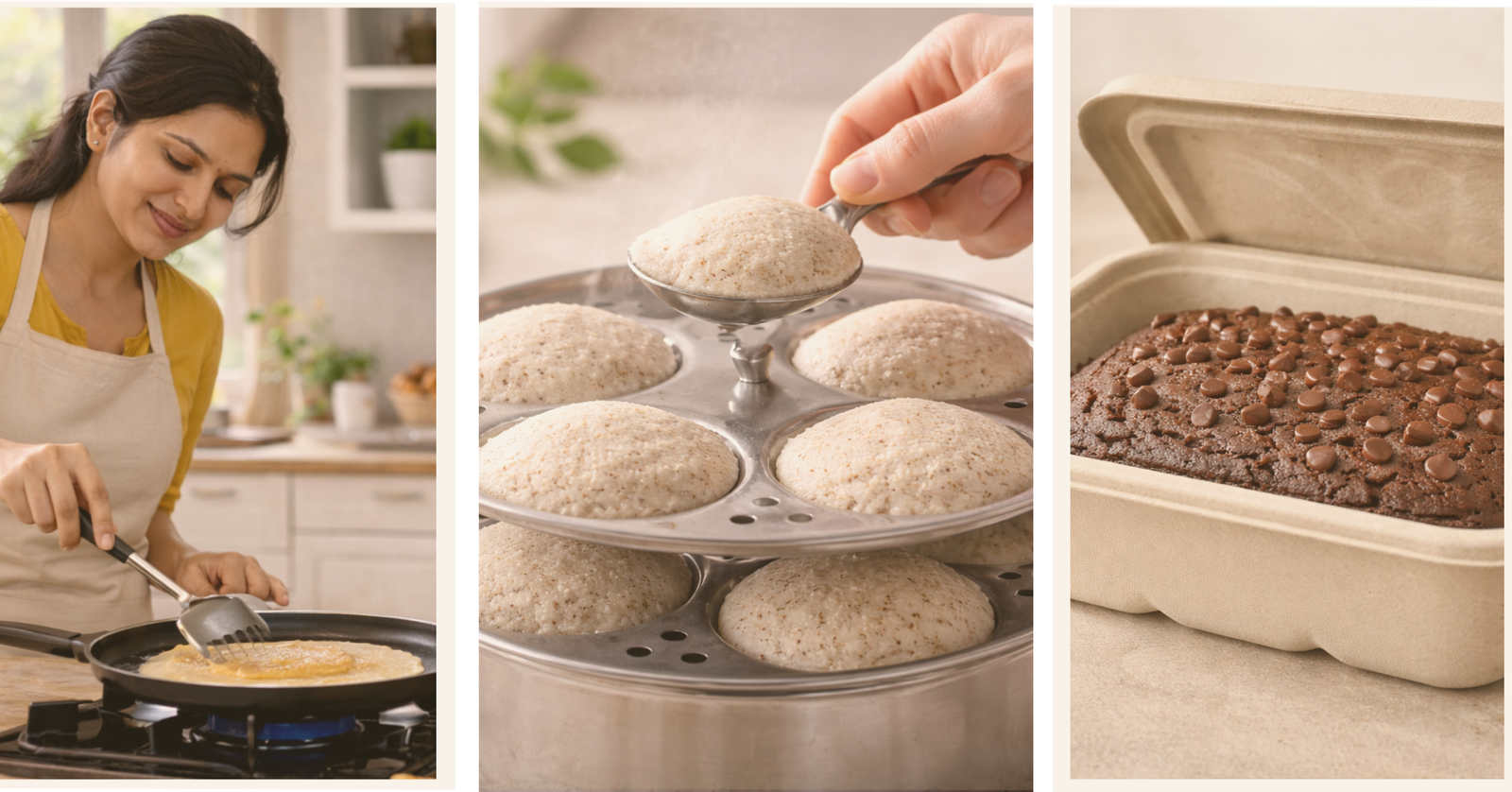
Different water quality, different stoves, different cookware — Indian kitchens vary widely. MilHut mixes are developed and tested for these everyday conditions, so millet-based foods are softer, more predictable, and more repeatable from kitchen to kitchen. This is better than saying simply “stay soft,” because the broader idea is consistency in real-world cooking.

Collage showing the convenience of MilHut’s premixes: a person cooking millet dosas on a stovetop, fluffy millet idlis steaming in a traditional idli stand, and a rich ragi chocolate cake topped with chips in a container

We Design for Imperfect, Everyday Kitchens

Different water, stoves and cookware can change how millet flour and millet mixes behave. We test our formulations across everyday kitchen conditions for soft, consistent and repeatable results.

Bay leaf and cloves arranged to showcase the usage of natural preservatives

We Keep Our Grains Naturally Protected.

From the way we source and handle our grains to how we store them, we believe in keeping things as natural as possible. We use traditional methods such as bay leaves and cloves to help protect stored grains — instead of relying on chemical preservatives. Because when the ingredient is good, we believe it should stay as close to its natural state as possible.

Bay leaf and cloves arranged to showcase the usage of natural preservatives

We Keep Our Grains Naturally Protected.

We use traditional practices such as bay leaves and cloves to help protect stored grains, rather than relying on chemical preservatives. Because we believe good millet grains and ingredients should stay as close to their natural state as possible.

The People Behind MilHut

Our clean-label values and founder-led philosophy guide every product we create.

Built by people who care about what goes into your food — and how it works in your kitchen.

MilHut brings together a founder-led vision, grain expertise, formulation science and production discipline — all around one belief:

Millet food should be simple, honest and made for real Indian kitchens.

Kavitha Jain

Founder & Clean-Label Vision

Make millet simpler. Keep food honest.

Kavitha built MilHut around a simple question:
Why should eating better mean making everyday cooking harder?

She shapes MilHut’s clean-label philosophy — from what goes into every mix to how it is explained to the customer.

Her north star: real food, clear choices, no unnecessary shortcuts.

Ketan Oza

Sourcing & Grain Integrity

It starts with the grain.

Ketan oversees MilHut’s grain supply chain — from sourcing and farmer partnerships to suppliers and careful handling.

He works to maintain quality, consistency and traceability at every stage, so the right grain reaches production in the right condition.

Good food starts with good grain.

Sushma Jain

Recipe Science & Formulation

We don’t make millets behave like wheat. We understand how they behave.

Sushma studies what happens when millet meets water, heat, fermentation and other ingredients — then turns that understanding into practical formulations.

The goal isn’t complicated food science.

It’s a better result in your everyday kitchen.

Manish Jain

 Production & Process Consistency

A good formulation should work beyond the lab.

Manish takes MilHut’s formulations into production, focusing on milling, process control and quality checks so each batch performs as intended.

Because consistency isn’t about getting it right once.

It’s about getting it right, batch after batch.


What Clean-Label Means at MilHut

Clean food is simple food — but creating truly clean-label products takes science, discipline and clarity. At MilHut, these principles guide what we formulate, how we process it, and what we put into every pack.

Single-Millet Formulations

Slow Stone-Milled Processing

NO - Preservatives

We formulate around individual grains, respecting how each millet behaves — without unnecessary blends or shortcuts.

Our stone-milling approach is designed to keep processing gentle and preserve the grain’s natural character.

We don’t rely on synthetic preservatives. We use carefully chosen ingredients and natural approaches to maintain product quality.

MilHut began in the foothills of Dang — a region where millets are not trends, but traditions. We work directly with local farmers who grow single-variety grains using time-tested, low-intervention farming. No middlemen. No bulk-blend sourcing. No mixing of inconsistent harvests. This traceability allows us to maintain purity, grain identity, and unmatched consistency in every batch. When you choose MilHut, you know exactly where your millet comes from — and the hands that grew it.

Sourced From Dang’s Millet Heartland

We source our millets directly from small farmers in the Dang region, where traditional, single-variety grains continue to grow naturally, without shortcuts.

By avoiding middlemen and blended bulk lots, we work to maintain reliable quality, clean flavour and traceability — so you know where your millet comes from and how it is handled.

Keep this section. It gives your sourcing story a specific place and makes Ketan’s sourcing role above more credible.

Respect the Grain. Preserve Its Character.

Freshly cleaned kodo, ragi, and jowar millets displayed in stainless steel trays during small-scale millet sorting at MilHut’s Dang unit.

Minimal Processing, Maximum Grain Integrity

We keep processing intentionally minimal — slow sorting, gentle sieving and controlled milling — to preserve each millet’s natural character.

No over-refining, no aggressive grinding, and no shortcuts that compromise the grain.

This low-intervention approach helps protect texture, flavour and the natural behaviour of each millet.

Every Batch Is Tested for Purity, Freshness & Grain Integrity

From moisture and grain quality to batch consistency, every MilHut batch goes through defined quality checks before it reaches your kitchen.

Our Promise to You

We make food we’re proud to put our name on.

Every MilHut product is made with carefully chosen ingredients, thoughtful formulation, and the same standards we expect in our own kitchen.

No unnecessary shortcuts. No hidden compromises. Just food made to be good, dependable and worth coming back to.

Getting Back to Roots. Eating Healthy.


WHY FAMILIES KEEP COMING BACK TO MILHUT

★★★★★

Trusted by Families Across India. Chosen Again and Again.

Families across India are rediscovering millets.
One kitchen, one meal and one tradition at a time.

Every order tells a story. Some families discovered us through our Easy Roll Flours, others through our breakfast mixes or cake mixes. Here are a few experiences shared by people who have made MilHut a part of their everyday kitchens.

━━━━━━━━━━━━━━━━━━━━━━

★★★★★

We Ordered One Product. Now We Keep Coming Back.

Our first order was just the Easy Roll Jowar Flour because we wanted to try it. A few months later, our pantry also has the idli mixes, dosa mixes and cake mixes. Every product has lived up to our expectations.

Ishita M.

Kalyani, West Bengal • Verified Customer

★★★★★

It Never Feels Like a Gamble

Buying food online always made me a little nervous. With MilHut, every order has arrived exactly as expected. That consistency is why I keep ordering again.

Naveen R.

Karad, Maharashtra • Verified Customer

★★★★★

I originally came for the millet flour, but gradually started trying the breakfast mixes too. It's rare to find a brand where every new product feels just as thoughtfully made.

Aparna S.

Thrissur, Kerala • Verified Customer

★★★★★

Healthy Choices Became Everyday Choices

We didn't suddenly change our entire diet. We simply started replacing one meal at a time with MilHut products, and over time it became our normal routine.

Vivek P.

Nalgonda, Telangana • Verified Customer

★★★★★

The products arrive neatly packed, fresh and exactly as shown online. That attention to detail makes the whole experience feel reliable.

Deepa G.

Madikeri, Karnataka • Verified Customer